Little Ears, Big Discoveries: Music and Movement in the First 1,000 Days
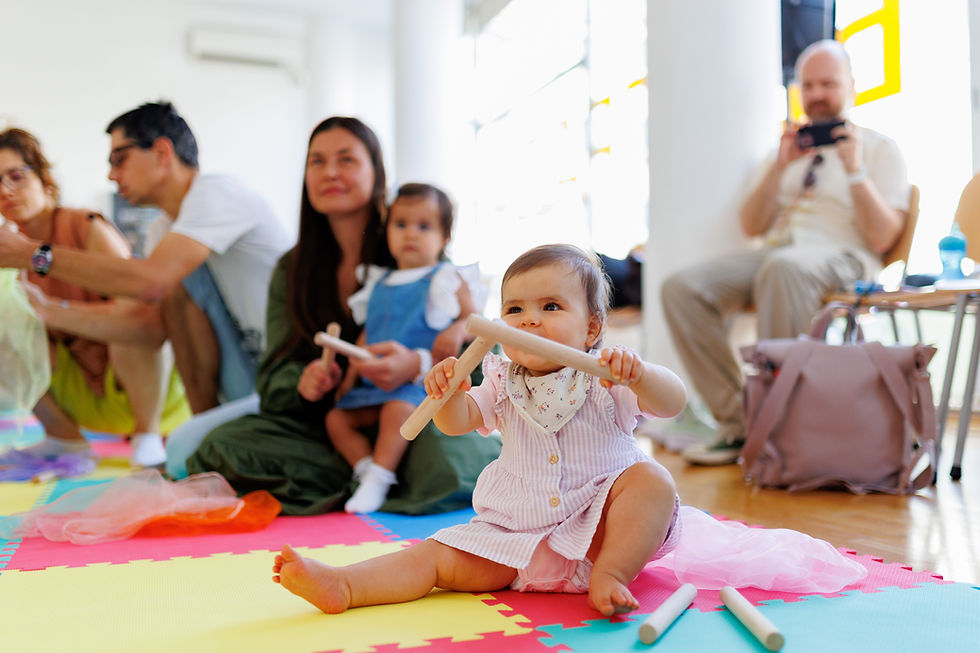
A baby waves their arms when a melody begins. A toddler sways to a familiar tune. A parent sings, pauses, and receives a delighted sound in response. These small musical moments can become some of the most joyful parts of family life.
They also raise an interesting question: what happens when babies experience music through listening, movement, and interaction with someone they love?
In their 2021 review, The First 1,000 Days of Life—An Opportunity for Music and Dance Movement, Jadranka Vlašić, Neda Aleksić, and Marina Đelić explore how infants respond to music and how caregivers can encourage musical interaction. Vlašić and Aleksić are affiliated with the University of Zagreb’s Faculty of Kinesiology, and Đelić with the University of Belgrade’s Faculty of Medicine. Their review brings together research on early listening, movement, and shared musical experiences. Read the original review.
The first 1,000 days span approximately the time from conception to a child’s second birthday. The authors describe this as an important period of development and highlight music as one way to create opportunities for playful interaction. A caregiver can notice a baby’s movements, expressions, or sounds and respond, turning a musical moment into an exchange. The review also calls for further research into how musical activities might support motor development.
You may have noticed that your little one responds differently to a song than to ordinary conversation. One study discussed in the review, conducted by Marcel Zentner and Tuomas Eerola, explored this with 120 infants aged five to 24 months. The researchers found that infants made more rhythmic movements in response to music and other regularly patterned sounds than to speech. They also observed some adjustment of movement speed to the music, and an association between rhythmic coordination and positive expressions. Read the study.
For families, a useful way to approach these findings is with curiosity. When a song begins, take a moment to watch. Does your child move, make a sound, or look towards you? Leave room for their response instead of expecting a particular performance. Enjoyment can be the purpose of the activity.
Movement adds another interesting dimension. In a study by Jessica Phillips-Silver and Laurel J. Trainor, seven-month-old infants listened to a rhythm while being bounced on either every second or every third beat. Afterwards, they preferred listening to a version of the rhythm with accents that matched the movement they had experienced. This finding suggests that bodily movement can influence how infants perceive musical rhythm. Read the study.
For a parent or caregiver, that offers an appealing way to think about musical play: listening and moving can belong together. A gentle sway during a song can be part of the experience, alongside the melody, your voice, and your attention.
You can bring that spirit of exploration into everyday life without preparing a formal activity. Here are a few ideas inspired by the research:
Make a song your own. Choose a melody you enjoy and add your child’s name or words about what you are doing. A song about putting on socks can become part of your morning together.
Leave space for a reply. Sing a short phrase, then pause. Your child might answer with a sound, a movement, or a look. Respond to whatever catches their interest.
Explore musical contrasts. With a toddler, try clapping slowly and then a little faster, or singing a phrase softly. Take turns choosing what happens next.
Let movement stay comfortable. Sway gently while holding your baby securely, or invite an older child to choose their own movements. Follow their interest and pause when they have had enough.
Return to a favourite. You do not need a new playlist every day. Revisit a song you both enjoy and see what becomes part of your shared routine.
At Artysh, this sense of shared discovery shapes our concerts. We welcome babies and children up to age three, together with their parents or caregivers, to experience classical music performed live on a variety of instruments.
A concert offers something lovely to explore together: the sight of a musician playing, the arrival of an unfamiliar sound, or a musical phrase that catches your attention. You can enjoy the artistry while sharing your child’s curiosity.
Whether you are singing at home or joining us for a live performance, make room for the moments that feel good to share. A familiar tune, a gentle movement, and your attention are a wonderful place to begin.
Discover Artysh’s upcoming concerts and join us for a musical adventure: www.artyshlab.com/events
Comments